The Problem
Speech recognition systems struggle with names from diverse linguistic backgrounds - phonetic ambiguity, spelling variation, and multilingual context all contribute to recognition failures. This is especially problematic in virtual assistants and customer service systems that handle a global user base with names from dozens of language families.
Objective
Develop a multilingual dataset with phonetic representations for 10,000+ names across diverse languages, enabling more accurate phonetic matching and improving the robustness of downstream speech recognition systems.
Key Contributions
Dataset Development
Compiled 10,000+ names spanning multiple languages and annotated each with phonetic representations using the International Phonetic Alphabet (IPA), ensuring broad linguistic coverage.
Phonetic Matching Algorithms
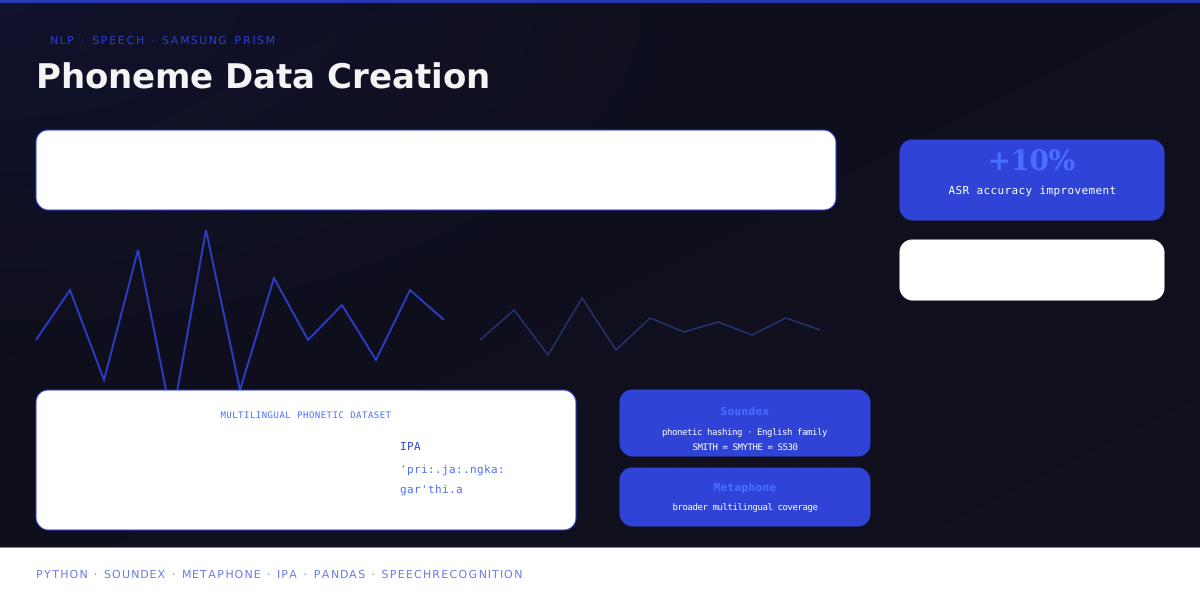
Built the pipeline using CMU Pronouncing Dictionary for phoneme lookup, with Soundex and Metaphone for fuzzy matching validation. The 10% gain in recognition fed directly into the next Wav2Vec2 model iteration. to align audio inputs with textual representations; developed validation scripts to test and refine phonetic consistency.
Data Processing Automation
Used Pandas for data manipulation and NumPy for numerical operations; automated cleaning, validation, and dataset augmentation workflows to maintain quality at scale.
Validation Framework
Built validation pipelines that tested phoneme consistency across language families, catching misalignments before they propagated into downstream model training.
Multilingual Coverage
Ensured the dataset spanned phonetically diverse language families - covering names from South Asian, East Asian, European, and Middle Eastern linguistic backgrounds.
Accuracy Improvement
Validated the dataset by integrating it into speech recognition test pipelines - measuring a 10% improvement in name recognition accuracy vs. baseline.
Technologies Used
| Category | Tools & Details |
|---|---|
| Language | Python - scripting, data processing, phonetic algorithm implementation |
| Phonetic Algorithms | Soundex & Metaphone - phonetic similarity matching and validation |
| Data Libraries | Pandas & NumPy - dataset management and numerical computation |
| Speech Testing | SpeechRecognition Library - testing dataset integration with ASR systems |
| Dataset Format | Structured CSV with name, language, IPA representation, phoneme tokens |
| Output | 10,000+ name phonetic dataset for speech recognition training |
Impact
- Constructed a 10,000+ name multilingual phonetic dataset from scratch
- Achieved 10% accuracy improvement in downstream speech recognition testing
- Implemented and validated Soundex and Metaphone phonetic matching algorithms
- Automated dataset quality pipelines ensuring consistency across language families
Conclusion
The Phoneme Data Creation project addressed a real gap in multilingual speech recognition - the lack of diverse, phonetically annotated training data. By building a systematic dataset and validation pipeline, the project achieved a measurable 10% accuracy improvement and laid the groundwork for more culturally inclusive voice technologies.